Personal Loans in Nevada: What Licensed Lenders May Charge
Nevada does not set a percentage cap inside its installment loan law. Instead, a loan above 40% APR becomes a high-interest loan that needs a separate license. Here is how that works and where to check a lender.
Cap above 36%, by LendCedar Editorial Team Updated 6 minute read
In short
A Nevada company in the business of lending needs an installment loan license under chapter 675 of the Nevada Revised Statutes from the Commissioner of Financial Institutions. A loan whose APR is more than 40% is a high-interest loan under chapter 604A, and making one takes a separate license under that chapter. The National Consumer Law Center therefore puts the limit for a chapter 675 lender at about 40% APR on both a $2,000 and a $10,000 loan. Since 2025, internet consumer loan contracts must be governed by Nevada law.
- $2,000 loan cap
- 40% APR
- $10,000 loan cap
- 40% APR
- High-interest line
- Above 40% APR
- Licensed by
- Nevada FID
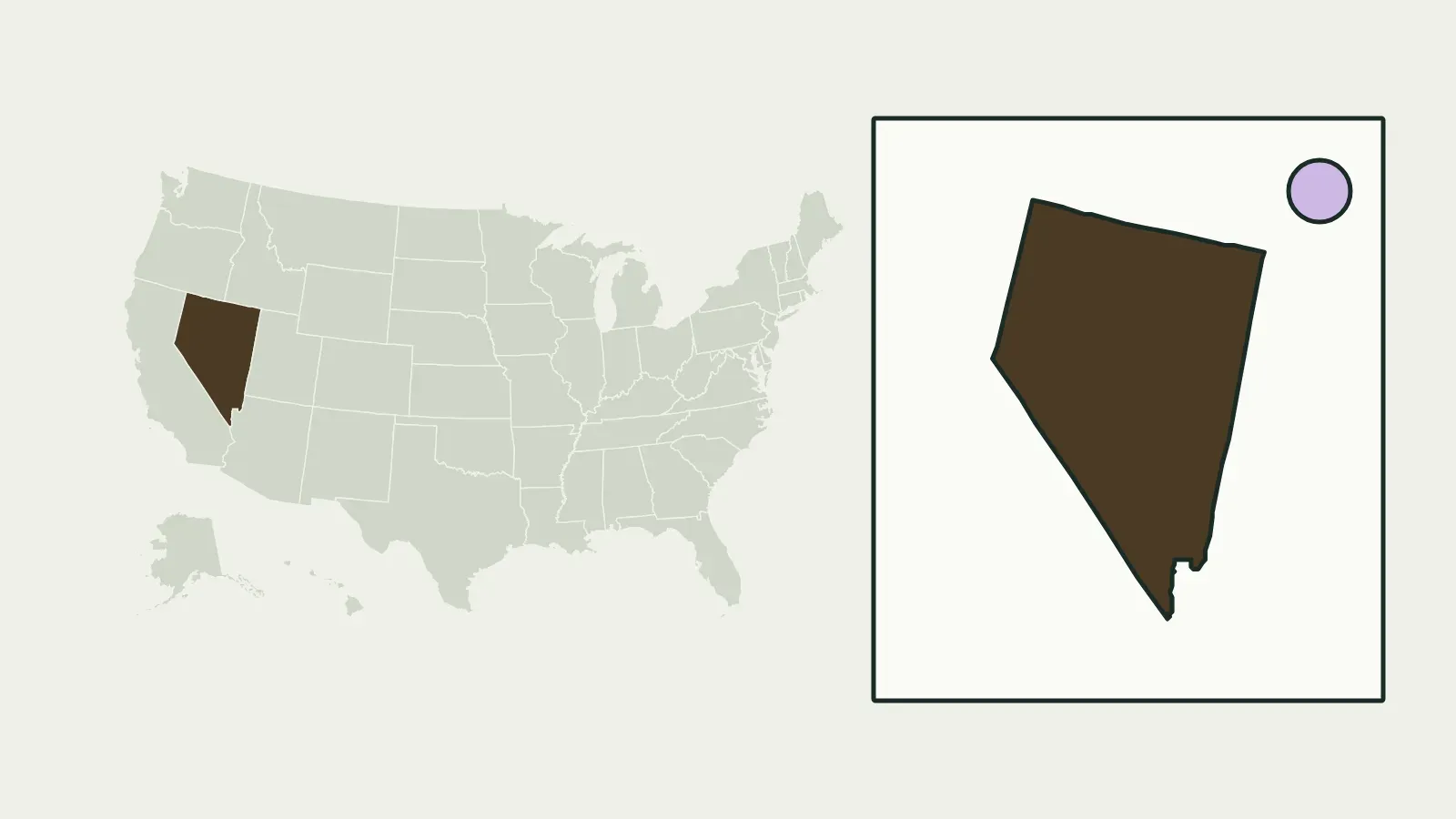
Nevada at a glance
How the Nevada limit works
Chapter 675 does not print a maximum rate for a closed-end installment loan. The note must disclose the rate or the total of the agreed charges, and on an open-end account the licensee may charge interest at any annual rate the agreement provides. The limit comes from two other rules working together.
- NRS 604A.0703 defines a high-interest loan as one that, under its original terms, charges an APR of more than 40%. The APR is figured under the federal Truth in Lending Act and Regulation Z, so it counts fees in the finance charge.
- NRS 675.060 requires anyone who offers high-interest, deferred deposit or title loan services to hold a separate license under chapter 604A for them.
A lender licensed only under chapter 675 therefore keeps its loans at or below 40% APR. A chapter 604A licensee may make high-interest loans above that line under that chapter's own rules, and those loans are tracked in a statewide database the Commissioner keeps. Check the APR on your Truth in Lending disclosure to see which side of the line an offer falls on.
Changes Nevada made in 2025
The 2025 Legislature added three sections to chapter 675. They do not change the 40% line, but they matter if you borrow online.
| Section | What it requires |
|---|---|
| NRS 675.3605 | An internet consumer loan contract must be governed by Nevada law and require disputes to be resolved in Nevada, unless federal law preempts it; conflicting terms are void |
| NRS 675.2805 | A licensee may not engage in any deceptive trade practice as defined in chapter 598 |
| NRS 675.2505 | A licensee must follow the federal safeguards rule, 16 CFR Part 314, and keep an information security program |
Who needs a license and who does not
NRS 675.060 bars anyone from engaging in the business of lending in Nevada without a license from the Commissioner for each office or place of business. The Financial Institutions Division of the Department of Business and Industry administers it.
- Banks and similar institutions doing business under Nevada banking laws are outside chapter 675. An out-of-state bank may charge the rates its home state allows.
- Online lenders that partner with a bank may lend through it, which can put the loan outside Nevada's licensing rules. Ask who the lender of record is.
- Payday, title and other high-interest loans fall under chapter 604A. Our sister site Lendmira covers them on its Nevada lending laws page.
Paying early and insurance
A licensee must let you pay one or more full installments in advance during business hours, and you may pay an open-end account in full at any time without a prepayment penalty. A licensee may not require you to buy insurance as a condition of a loan, and the charge for any coverage you choose may not exceed the premium. See credit insurance and add-ons.
Check a lender and file a complaint
- Check the license with the Financial Institutions Division, or search the company in NMLS Consumer Access, before you apply.
- Keep the loan papers: the Truth in Lending disclosure, the agreement and any messages about fees.
- Complain to the Division through its Resources and Complaints page, or call the Commissioner's office in Las Vegas at (702) 486-4120.
- Send a complaint to the CFPB as well if the lender is a bank or a bank partner, or if you are unsure who regulates it.
Nearby, California caps a $2,000 two-year loan at about 25% APR and Oregon at 36%, Arizona allows about 41%, and Utah and Idaho have no numeric cap. The state rules map shows every state, and how to verify a lender lists the checks to run.
Sources
- NRS chapter 675 — Installment Loans (Nevada Legislature)
- NRS chapter 604A — Deferred deposit, high-interest, title and check-cashing services (Nevada Legislature)
- Nevada Financial Institutions Division — resources and complaints
- State APR caps for $500, $2,000 and $10,000 installment loans, December 2025 (National Consumer Law Center)
We checked the facts on this page against these sources on October 27, 2026. The 40% figure is the chapter 604A line for high-interest loans, not a rate printed in chapter 675.
Questions people ask
What is the maximum interest rate on a personal loan in Nevada?
Chapter 675 sets no printed rate, but a loan above 40% APR is a high-interest loan that needs a separate chapter 604A license. A lender licensed only under chapter 675 stays at or below 40% APR.
What is a high-interest loan in Nevada?
Under NRS 604A.0703, a loan that under its original terms charges an APR of more than 40%, figured under the federal Truth in Lending rules. Deferred deposit and title loans are defined separately.
What changed for online loans in Nevada in 2025?
NRS 675.3605 now requires an internet consumer loan contract to be governed by Nevada law and to resolve disputes in Nevada, unless federal law preempts it. Conflicting terms are void.
How do I complain about a Nevada lender?
Use the Financial Institutions Division Resources and Complaints page or call (702) 486-4120. See how to verify a lender before you apply.
Ask lenders for real offers
Describe the loan you have in mind. LendCedar passes your request to lenders and loan brokers who may contact you with offers; you compare them and decide.
- The loan you have in mind: amount, purpose, credit and income.
- Your contact details and your consent to be contacted.
- A lender or loan broker may contact you with an offer. Nothing is decided until you sign with a lender.
LendCedar is not a lender or a loan broker and does not make credit decisions.
You pay LendCedar nothing. Lenders and loan brokers pay us for requests, and they set their own rates and terms. How we make money.
Nearby in the guide
-
Offer term
Total cost of a loan
Finance charge, APR and total of payments, with three worked offers for the same $10,000 loan.
-
Step
Verify a lender
Find the license on NMLS or with your state, match the lender of record and spot advance-fee scams.
-
Offer term
Arbitration clauses
What an arbitration clause and class-action waiver take away, how to opt out, and who is protected.