Personal Loans in New Hampshire: What Licensed Lenders May Charge
New Hampshire caps small loans of $10,000 or less at 36% APR under RSA 399-A. Here is what the cap covers, which lenders need a license, and how to check one or file a complaint.
Cap 36% or less, by LendCedar Editorial Team Updated 6 minute read
In short
A business that makes small loans in New Hampshire needs a small loan lender license from the bank commissioner under RSA 399-A. A small loan is a consumer loan of $10,000 or less, and its annual percentage rate may not exceed 36% (RSA 399-A:16). On the National Consumer Law Center's comparison, that puts the ceiling at about 36% APR for both a $2,000 two-year loan and a $10,000 five-year loan. Banks and credit unions are outside the chapter.
- $2,000 loan cap
- 36% APR
- $10,000 loan cap
- 36% APR
- Small-loan ceiling
- Loans of $10,000 or less
- Licensed by
- NH Banking Department
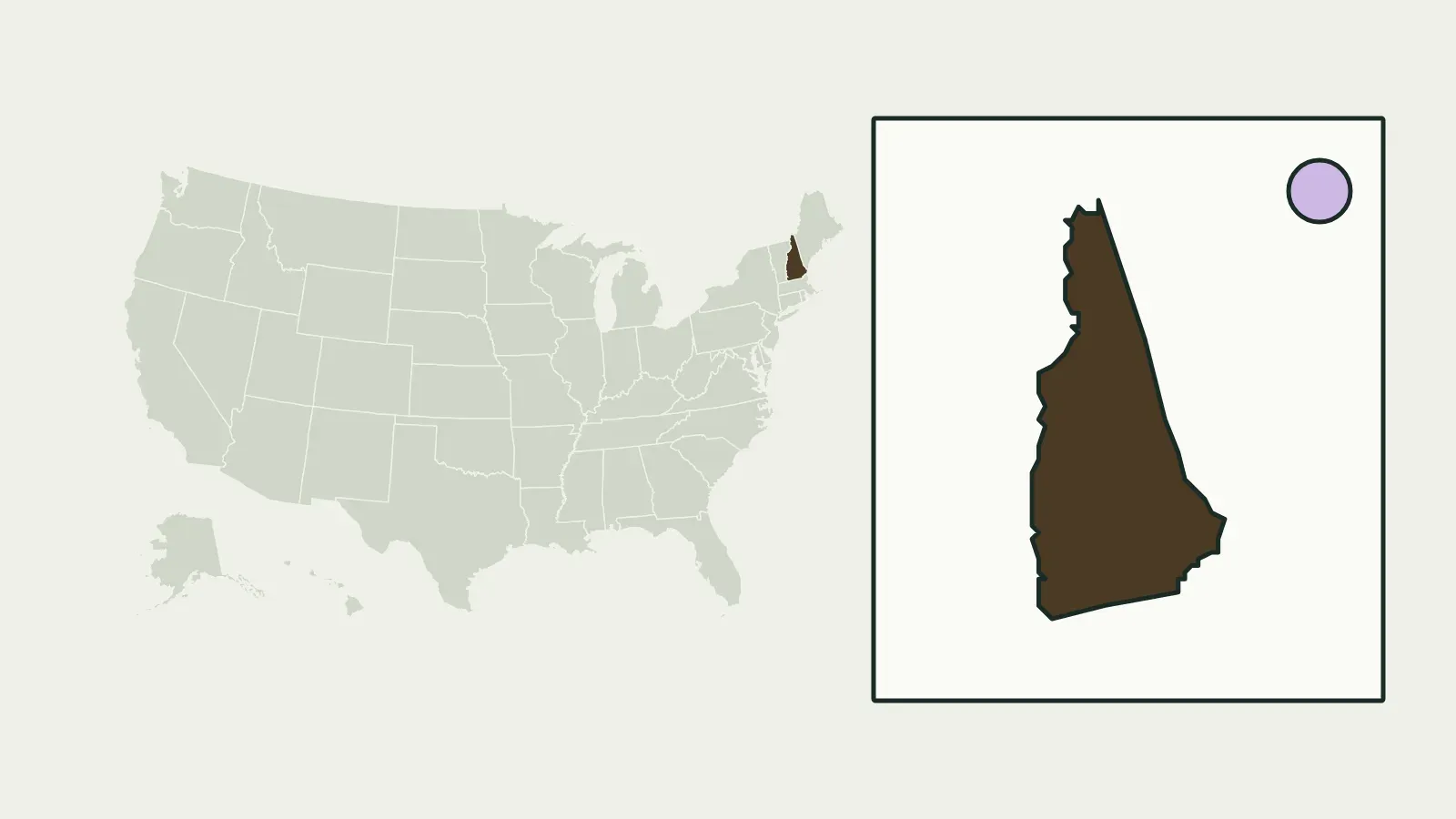
New Hampshire at a glance
How the New Hampshire cap works
RSA 399-A covers four kinds of small loans: closed-end installment loans, open-end loans, payday loans and title loans. A loan counts as a small loan when it is $10,000 or less and is for personal, family or household use (RSA 399-A:1, XX). For closed-end and open-end small loans, RSA 399-A:16 sets one flat limit: the annual percentage rate may not exceed 36%.
The APR is the rate on your Truth in Lending disclosure, so it already counts interest and most fees. The statute leaves two charges out of the finance charge: one application fee and one participation or membership fee, each up to $100 per borrower per year. Those can raise what you pay above what the APR alone suggests, so add them to the total when you compare offers.
| Type of small loan | Limit in the statute |
|---|---|
| Installment or open-end loan, $10,000 or less | 36% APR (RSA 399-A:16) |
| Payday loan | 36% APR, interest only (RSA 399-A:17) |
| Title loan | No more than 25% a month (RSA 399-A:18) |
How New Hampshire compares with its neighbors
New Hampshire's flat 36% is higher than the limits next door on the same comparison of a $2,000 two-year loan: Vermont about 21%, Massachusetts about 24% and Maine about 30%. Loans above $10,000 are outside RSA 399-A's small-loan cap, so read the APR on any larger offer with care. The rules that apply follow the lender's license and your state of residence. The state rules map shows every state side by side.
Who needs a license and who does not
No one may engage in the business of a small loan lender in New Hampshire without first obtaining a license from the commissioner (RSA 399-A:2). Online lenders that lend to New Hampshire residents under state law need the same license as a storefront lender.
- Banks, trust companies and credit unions operating under the laws that govern them are exempt (RSA 399-A:3), and a bank may charge the rates its home state allows.
- Lenders that partner with an exempt bank are not automatically outside the law. RSA 399-A:2, III applies the chapter to anyone who tries to evade it, including a company that lends while claiming to be the agent of an exempt entity but keeps the preponderant economic interest in the loan.
- Payday and title loans are licensed under the same chapter with their own rules. Our sister site Lendmira covers them on its New Hampshire lending laws page.
Late fees, prepayment and add-ons
If the contract allows it, a licensed lender may charge a single late fee on each installment in default, up to 5% of that installment (RSA 399-A:15, XV). The lender must let you pay one or more full installments in advance. Credit life, accident and health, and involuntary unemployment insurance may be sold only in line with RSA 408:14; read credit insurance and add-ons before you agree to any of them.
Check a lender and file a complaint
- Confirm the license before you apply: ask the lender for its New Hampshire license number and check it with the Banking Department or on NMLS Consumer Access.
- Keep the loan papers: the Truth in Lending disclosure, the agreement and any messages about fees.
- Contact the New Hampshire Banking Department at (603) 271-3561, weekdays from 8:00 am to 4:30 pm, or use the Consumer Assistance section of its website to file a complaint.
- Send a complaint to the CFPB as well if the lender is a bank or a bank partner, or if you are unsure who regulates it. Our guide on how to verify a lender lists the warning signs.
Sources
- RSA Chapter 399-A — Licensing and Regulation of Small Loan, Title Loan, and Payday Loan Lenders (New Hampshire General Court)
- New Hampshire Banking Department — consumer assistance and contacts
- State APR caps for $500, $2,000 and $10,000 installment loans, December 2025 (National Consumer Law Center)
We checked the facts on this page against these sources on October 27, 2026. The 36% limit is set in the statute itself, so it does not change unless the legislature amends RSA 399-A.
Questions people ask
What is the maximum interest rate on a personal loan in New Hampshire?
For a small loan of $10,000 or less from a licensed lender, the APR may not exceed 36% under RSA 399-A:16. An application fee and a membership fee of up to $100 each per year are left out of that finance charge.
Does the 36% cap apply to loans over $10,000?
No. RSA 399-A defines a small loan as $10,000 or less, so the small-loan cap does not reach larger loans. Compare the APR on the disclosure for any larger offer.
Do the New Hampshire caps apply to banks and credit unions?
No. Banks, trust companies and credit unions are exempt from RSA 399-A, and a bank may charge the rate its home state allows. A non-bank that only claims to act for a bank can still fall under the chapter.
Who regulates personal loan lenders in New Hampshire?
The bank commissioner and the New Hampshire Banking Department license small loan lenders and take complaints. See how to verify a lender for what to check first.
Ask lenders for real offers
Describe the loan you have in mind. LendCedar passes your request to lenders and loan brokers who may contact you with offers; you compare them and decide.
- The loan you have in mind: amount, purpose, credit and income.
- Your contact details and your consent to be contacted.
- A lender or loan broker may contact you with an offer. Nothing is decided until you sign with a lender.
LendCedar is not a lender or a loan broker and does not make credit decisions.
You pay LendCedar nothing. Lenders and loan brokers pay us for requests, and they set their own rates and terms. How we make money.
Nearby in the guide
-
Offer term
Late fees and returned payments
Where the late charge appears, why the APR leaves it out, state limits in Ohio and Florida, and federal rules.
-
Step
Verify a lender
Find the license on NMLS or with your state, match the lender of record and spot advance-fee scams.
-
Offer term
Credit insurance and add-ons
Credit life, disability and job-loss coverage: when it is optional, what it adds, how to cancel it.