Personal Loans in Ohio: What Licensed Lenders May Charge
Ohio has several consumer lending laws in Revised Code Chapter 1321, each with its own rate and fee limits. Here is which one covers a typical $2,000 or $10,000 personal loan, what it allows, and where to check a lender.
Cap 36% or less, by LendCedar Editorial Team Updated 7 minute read
In short
Most Ohio personal installment loans from non-bank lenders are made under one of the lending laws in Revised Code Chapter 1321, licensed by the Division of Financial Institutions of the Ohio Department of Commerce. The Consumer Installment Loan Act allows the highest rate for a two-year or five-year loan: 25% a year on the unpaid principal, plus an origination charge of up to $200 on a $2,000 loan and up to the greater of $250 or 1% on a loan of $5,000 or more. The Short-Term Loan Act covers only loans of $1,000 or less with terms of up to one year. The National Consumer Law Center puts the cap at about 31% APR on a $2,000 two-year loan and about 26% on a $10,000 five-year loan.
- $2,000 loan cap
- About 31% to 35% APR
- $10,000 loan cap
- 26% APR
- Installment loan rate
- 25% a year plus fees
- Licensed by
- Ohio Commerce DFI
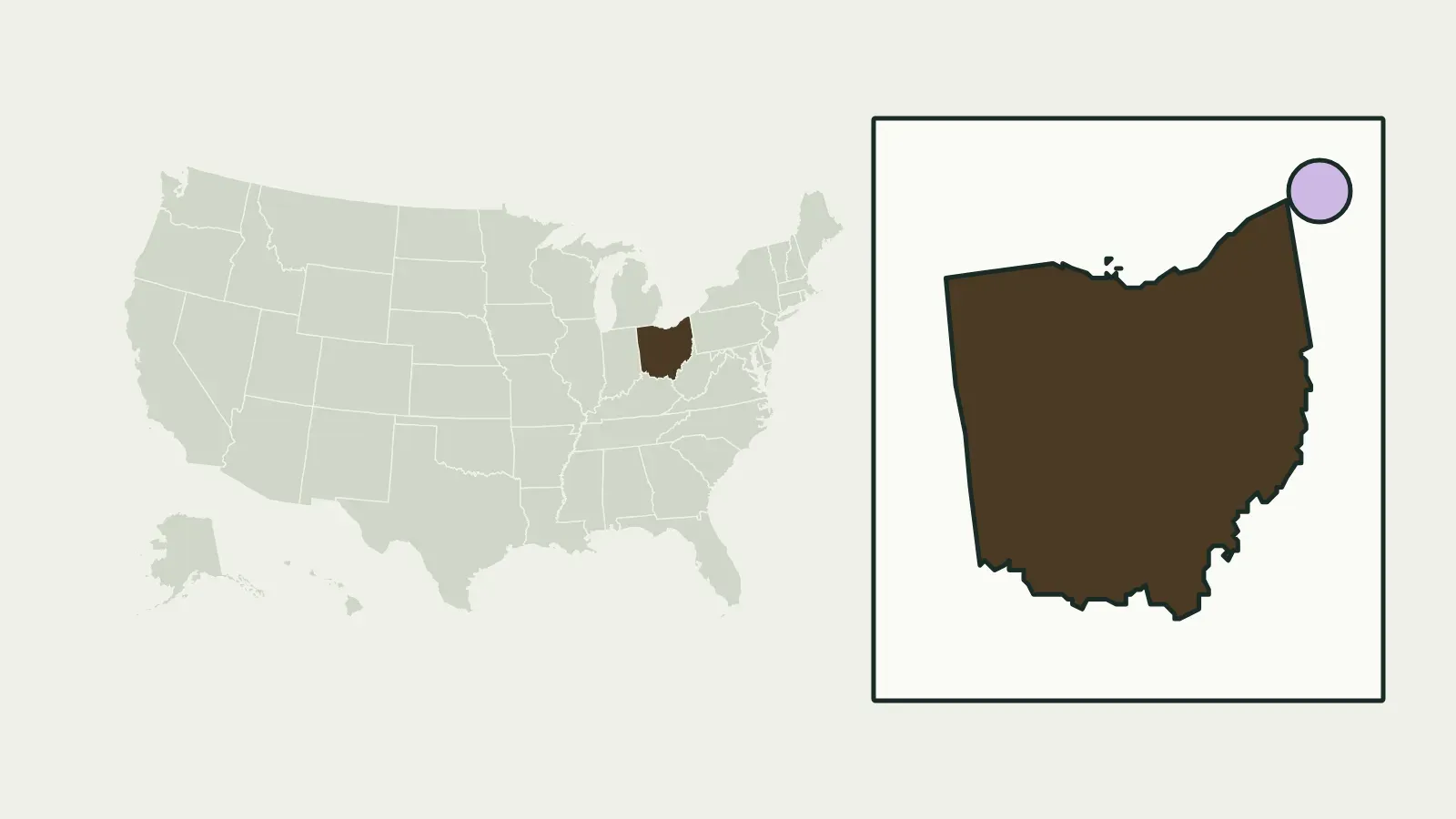
Ohio at a glance
Which Ohio law covers your loan
Chapter 1321 holds four separate lending laws, and a lender may be licensed under more than one. The loan's size and term decide which ones are possible. A $2,000 loan repaid over two years is too large and too long for the Short-Term Loan Act, so it is made under one of the other three.
| Law | Loans it covers | Maximum interest |
|---|---|---|
| Short-Term Loan Act (1321.35 to 1321.48) | $1,000 or less, 91 days to one year | Set in the act; see Lendmira |
| Small Loan Act (1321.01 to 1321.19) | Installment loans | 28% on the first $1,000, 22% above |
| General loan law (1321.51 to 1321.60) | Installment loans, secured or unsecured | 21% a year |
| Consumer Installment Loan Act (1321.62 to 1321.702) | Installment and open-end loans | 25% a year |
The Short-Term Loan Act limits were rewritten by House Bill 123, effective October 29, 2018: a short-term loan may not exceed $1,000 and must run no more than one year and at least 91 days. A shorter term is allowed only if the monthly payment stays within a set share of your verified income. Our sister site Lendmira covers those loans on its Ohio lending laws page.
What the Consumer Installment Loan Act allows
Section 1321.68 lets a licensee charge interest of up to 25% a year on the unpaid principal, computed by the actuarial method. On top of interest, it allows an origination charge that steps up with the loan size, paid at closing or added to the principal.
| Principal amount | Maximum origination charge |
|---|---|
| $500 or less | $15 |
| Over $500, under $1,000 | $30 |
| $1,000 to under $2,000 | $100 |
| $2,000 to under $5,000 | $200 |
| $5,000 or more | The greater of $250 or 1% of principal |
A licensee may also charge up to $25 for a credit report it obtains for your loan. Because these charges count in the finance charge, compare offers on the APR shown on your Truth in Lending disclosure, not on the interest rate.
Late fees, prepayment and credit insurance
- Late fee: one default charge per installment not paid in full within ten days of its due date, up to the greater of 5% of the installment or $15 (1321.68(K)).
- Returned payment: up to $20, plus any amount another bank passes on (1321.68(J)).
- Prepayment: if you pay a precomputed loan in full a month or more before the last due date, the lender must refund or credit the charges for the unexpired periods.
- Credit insurance: credit life, accident and health, and unemployment premiums may not exceed the rate filed with the superintendent of insurance, and you may cancel within 25 days after the loan is made for a full refund (1321.68(E)).
Read credit insurance and add-ons before you agree to any coverage; the 25-day window is your chance to undo it.
Licensing and how Ohio compares
Under section 1321.63, no one may engage in the business of lending under the Consumer Installment Loan Act, or charge more than a lender without a license could, without first getting a license from the superintendent of financial institutions. The rule also covers anyone who uses a device, subterfuge or pretense to exceed the limits, or who arranges such a loan for a fee. Banks and credit unions answer to separate charters and regulators, and a bank may charge the rates its home state allows; lenders that partner with a bank may lend outside these limits, so ask who the lender of record is.
On the National Consumer Law Center's comparison of a $2,000 two-year loan, Ohio's figure sits between Pennsylvania at about 24% and Michigan at about 30% on one side, and Indiana at about 40% and Kentucky at about 42% on the other. The state rules map shows every state side by side.
Check a lender and file a complaint
- Look up the license on NMLS Consumer Access at https://www.nmlsconsumeraccess.org/, which the Division of Financial Institutions points to for non-depository lenders, or through the Department of Commerce license lookup.
- Ask which law the loan is made under: the agreement should say whether it is a Consumer Installment Loan Act, Small Loan Act or general loan law loan, which tells you the limits.
- File a complaint with the Division of Financial Institutions online at https://com.ohio.gov/wps/portal/gov/com/divisions-and-programs/financial-institutions/file-a-complaint-fi.
- Send a complaint to the CFPB as well if the lender is a bank or a bank partner. Our guide on how to verify a lender lists the warning signs.
Sources
- Ohio Revised Code 1321.68 — Consumer Installment Loan Act interest and charges (Ohio Laws)
- Ohio Revised Code 1321.63 — Consumer Installment Loan Act license required (Ohio Laws)
- Ohio Revised Code 1321.39 — Short-Term Loan Act loan amount and term (Ohio Laws)
- Ohio Revised Code 1321.13 — Small Loan Act interest and charges (Ohio Laws)
- Ohio Revised Code 1321.57 — General loan law interest and charges (Ohio Laws)
- Division of Financial Institutions, Ohio Department of Commerce — complaints and license lookup
- State APR caps for $500, $2,000 and $10,000 installment loans, December 2025 (National Consumer Law Center)
- Senate Bill 456, 136th General Assembly — changes to the consumer installment loan law (Ohio House)
We checked the facts on this page against these sources on October 27, 2026. The 35.4% example is our own calculation from section 1321.68; Senate Bill 456, which would change the consumer installment loan law, was still in Senate committee when we checked.
Questions people ask
What is the maximum interest rate on a personal loan in Ohio?
It depends on the law the lender uses. Under the Consumer Installment Loan Act it is 25% a year on the unpaid principal, plus an origination charge that depends on the loan size: up to $200 on a $2,000 loan and the greater of $250 or 1% from $5,000.
Does the Ohio Short-Term Loan Act cover a $2,000 loan?
No. Since House Bill 123 took effect on October 29, 2018, a short-term loan may not exceed $1,000 and may run no more than one year. A $2,000 installment loan is made under the Consumer Installment Loan Act, the Small Loan Act or the general loan law.
What late fee can an Ohio lender charge?
Under the Consumer Installment Loan Act, one charge per installment more than ten days late, up to the greater of 5% of the installment or $15. See late fees and returned payments.
Who regulates personal loan lenders in Ohio?
The Division of Financial Institutions of the Ohio Department of Commerce licenses consumer lenders under Chapter 1321 and takes complaints online.
Ask lenders for real offers
Describe the loan you have in mind. LendCedar passes your request to lenders and loan brokers who may contact you with offers; you compare them and decide.
- The loan you have in mind: amount, purpose, credit and income.
- Your contact details and your consent to be contacted.
- A lender or loan broker may contact you with an offer. Nothing is decided until you sign with a lender.
LendCedar is not a lender or a loan broker and does not make credit decisions.
You pay LendCedar nothing. Lenders and loan brokers pay us for requests, and they set their own rates and terms. How we make money.
Nearby in the guide
-
Offer term
Total cost of a loan
Finance charge, APR and total of payments, with three worked offers for the same $10,000 loan.
-
Step
Verify a lender
Find the license on NMLS or with your state, match the lender of record and spot advance-fee scams.
-
Offer term
Net loan proceeds
What reaches your account when a fee is deducted, and how to gross up a loan to net the sum you need.