Personal Loans in Utah: What Lenders May Charge
Utah sets no maximum rate on consumer installment loans. Lenders and borrowers may agree to any finance charge the Consumer Credit Code does not restrict. Here is what that means, what lenders must file, and where to check one.
No numeric cap, by LendCedar Editorial Team Updated 5 minute read
In short
Under Utah Code § 70C-2-101, unless another part of the Consumer Credit Code restricts it, the parties to a consumer credit agreement may contract for any finance charge and other charges and fees. The National Consumer Law Center lists Utah as having no numeric cap on $500, $2,000 or $10,000 installment loans, only an unconscionability standard. Instead of a rate license, a business that lends to Utahns under the code files a Consumer Credit Notification through NMLS with the Utah Department of Financial Institutions (DFI).
- $2,000 loan cap
- No numeric cap
- $10,000 loan cap
- No numeric cap
- Rate rule
- Any agreed finance charge
- Supervised by
- Utah DFI
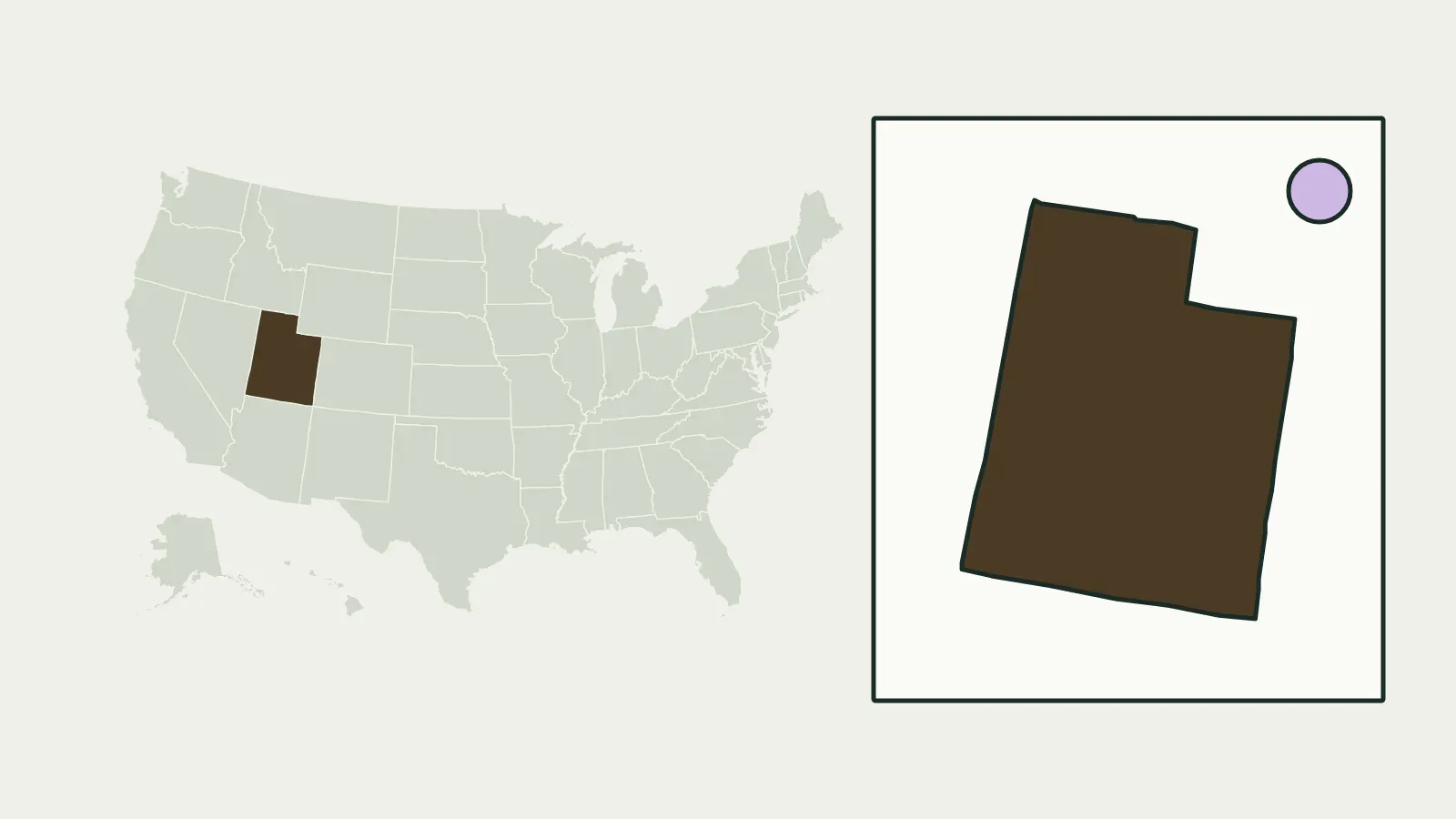
Utah at a glance
How Utah handles loan prices
The Utah Consumer Credit Code is Title 70C of the Utah Code. Its basic rule on price, § 70C-2-101, lets the lender and borrower agree on the finance charge and other charges and fees, except where another provision of the title restricts or covers them. There is no rate tier, no flat cap and no fee ceiling for an ordinary personal installment loan.
That puts the work of comparing on you. The APR on your Truth in Lending disclosure is the one figure that shows the interest and most fees on the same scale. Two offers for the same $2,000 can differ by many points, and both can be legal. Ask each lender for the APR, the finance charge and the total of payments for the same amount and term, and compare all three.
How Utah compares with its neighbors
On the NCLC comparison of a $2,000 two-year loan, Colorado and Wyoming cap that loan at about 31% APR, New Mexico at 36%, Nevada at 40% and Arizona at 41%. Idaho, like Utah, has no numeric cap. Your state of residence and the lender's license decide which rules apply, not where the lender is based. The state rules map shows every state side by side.
Who must file with the state
The DFI says the Consumer Credit Code generally applies to lending to Utah residents for personal, family or household purposes, selling on credit, consumer leases, taking assignments of consumer debt and collecting consumer credit debt. A business that is subject to the code must file a Consumer Credit Notification (CCN) through the Nationwide Multistate Licensing System. The DFI places the duty on the business: those who conduct consumer credit activities must determine whether the code covers them.
- Larger transactions: the code has an exemption threshold under § 70C-1-202, which the DFI gives as $73,400 from January 1, 2026.
- Banks and credit unions answer to their own charters and banking regulators, and a bank may charge the rates its home state allows. If an online lender says a bank makes your loan, ask who the lender of record is.
- Payday and auto title loans follow separate Utah laws. Our sister site Lendmira covers them on its Utah lending laws page.
If a lender asks for a fee before it will approve or fund the loan, treat it as a warning sign; how to verify a lender explains what to check.
Check a lender and file a complaint
- Check the filing in NMLS Consumer Access: the DFI says this is where you can confirm that a company has submitted a Consumer Credit Notification.
- Compare APRs from at least two or three lenders, including a credit union, since no cap limits the price.
- Keep the loan papers: the Truth in Lending disclosure, the agreement and any messages about fees.
- Complain to the DFI through its file a complaint page, or call the department at 801-538-8830.
- Send a complaint to the CFPB as well if the lender is a bank or a bank partner, or if you are unsure who regulates it.
Sources
- Utah Code § 70C-2-101 — Finance and other charges (Justia, 2025 edition)
- Utah Department of Financial Institutions — Consumer Lending
- Utah Department of Financial Institutions — file a complaint
- State APR caps for $500, $2,000 and $10,000 installment loans, December 2025 (National Consumer Law Center)
We checked the facts on this page against these sources on October 27, 2026. The exemption threshold of $73,400 took effect on January 1, 2026, according to the DFI.
Questions people ask
Is there a maximum interest rate on personal loans in Utah?
No numeric one. Utah Code § 70C-2-101 lets the parties to a consumer credit agreement contract for any finance charge and other charges and fees, unless another part of Title 70C restricts them.
Do Utah consumer lenders need a license?
Businesses subject to the Utah Consumer Credit Code file a Consumer Credit Notification through NMLS with the Department of Financial Institutions. Payday and title lenders fall under separate laws.
How do I check a Utah lender?
Search the company in NMLS Consumer Access to see whether it has filed a Consumer Credit Notification. See how to verify a lender for what else to check.
What can I do if a Utah loan seems unfair?
Keep your papers and complain to the Utah DFI at 801-538-8830 or online. You can also file with the CFPB. A lawyer or legal aid office can tell you whether a term may be challenged as unconscionable.
Ask lenders for real offers
Describe the loan you have in mind. LendCedar passes your request to lenders and loan brokers who may contact you with offers; you compare them and decide.
- The loan you have in mind: amount, purpose, credit and income.
- Your contact details and your consent to be contacted.
- A lender or loan broker may contact you with an offer. Nothing is decided until you sign with a lender.
LendCedar is not a lender or a loan broker and does not make credit decisions.
You pay LendCedar nothing. Lenders and loan brokers pay us for requests, and they set their own rates and terms. How we make money.
Nearby in the guide
-
Offer term
Total cost of a loan
Finance charge, APR and total of payments, with three worked offers for the same $10,000 loan.
-
Step
Where to borrow
Banks, credit unions, online lenders, CDFIs and finance companies: who regulates each and what they may charge.
-
Step
Verify a lender
Find the license on NMLS or with your state, match the lender of record and spot advance-fee scams.